
Considering an Upgrade to Dental Implants?
Have you been thinking of upgrading your current tooth replacement strategy but aren’t sure where to start? This is a great time of growth in modern dentistry, especially when it comes to replacing missing teeth! With the evolution of dental implants, patients don’t have to suffer some of the pains of the past when older, traditional tooth replacement methods were used.
 Traditionally, missing teeth were always “fixed” with bridges or dentures. And while both of those procedures are still in use by dentists and do still serve an important purpose, they often cause unintended problems in the mouth that modern dental implants may be able to alleviate, or avoid completely.
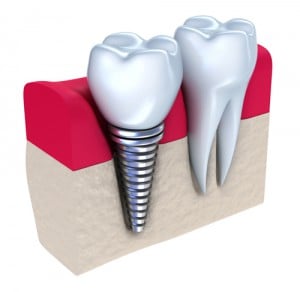
What is a dental implant, you may be asking? At the most basic level, a dental implant is simply a prosthetic tooth that is mounted to a metal post which is screwed into the jaw bone. The procedure is typically done in two visits. During the first procedure, a titanium screw is inserted into the jawbone, where it is allowed to “settle in” and bond, a process that takes about six to eight months. After that, the dentist creates a prosthetic tooth and attaches it to the titanium post for a fully functional (yet fake) tooth!
The benefit of dental implants is that, unlike dentures, they are almost unnoticeable by the patient. Anyone who has had dentures knows that they tend to slip and wear down and sometimes even cause mild pain or discomfort. With dental implants, you will not even know they are there. They function just like a natural tooth in your mouth, no slipping, movement or separate cleaning required. Similarly, patients who are used to receiving bridges may benefit by an upgrade to an implant as bridges have a tendency to invite bacteria and infection, requiring additional replacements.
Whatever your concerns about dental implants are, we are here to help. Give us a call today to see if dental implants might be right for you!
 In our office, we have many years of experience in dealing with nervous patients. So to help you out, we’ve compiled this quick yet effective set of tips for dealing with those inevitable nerves before your dental procedure.
 1. Can dental implants get cavities?
 Recent research has suggested that women with periodontal disease may have a higher risk of unwanted childbirth complications, such as pre-term labor and low birth weight of the baby. However, luckily, the opposite is also true! A thorough exam by your oral health professional may decrease the chance that you will have these pregnancy and labor problems.
 This is a great article to share with your children! How many of these facts did you already know?
 The way this was treated in the past was by one of two methods. The first method was to install a bridge. The second commonly used method was dentures. But both of those methods present their own challenges and hassles to patients. Thankfully, dental implants have improved so much over the years that more often than not they are a better choice for a patient’s oral care plan.